
AI News This Week: 5 Shifts in Models and Enterprise AI
The most important AI news this week was not a benchmark result or chatbot feature. From July 5 to July 12, 2026, the strongest signals came from five connected areas: agentic model tooling, workplace AI, global governance, specialist-chip financing and control of AI infrastructure. Google expanded Managed Agents in the Gemini API; OpenAI launched ChatGPT Work; governments met at the first U.N. Global Dialogue on AI Governance; SambaNova raised $1 billion; and hardware strategy came into focus through DeepSeek’s reported chip effort and SK Hynix’s planned U.S. listing.
AI news this week at a glance
The five developments covered in this weekly AI news roundup
- Agentic model tooling: Google expanded Managed Agents in the Gemini API on July 7, adding background tasks and remote MCP.
- Enterprise AI: OpenAI launched ChatGPT Work on July 9.
- Governance: The U.N. held its first government-level global dialogue on AI in Geneva on July 6.
- Startup capital: SambaNova raised $1 billion in the first close of its Series F financing at an $11 billion valuation.
- Infrastructure: Reuters reported that DeepSeek was developing its own AI chip, while SK Hynix launched a planned $28 billion U.S. listing tied to AI demand.
The bigger theme: deployment, economics and governance
These AI industry updates show competition moving beyond model outputs. The questions are whether systems can take useful actions, whether businesses can deploy them in work environments, who supplies the compute beneath them and how governments respond. That is why an API update, enterprise launch, diplomatic meeting, funding round and memory-chip listing belong in the same roundup.
Frontier and specialized AI models compete on usefulness
What changed this week in leading AI models
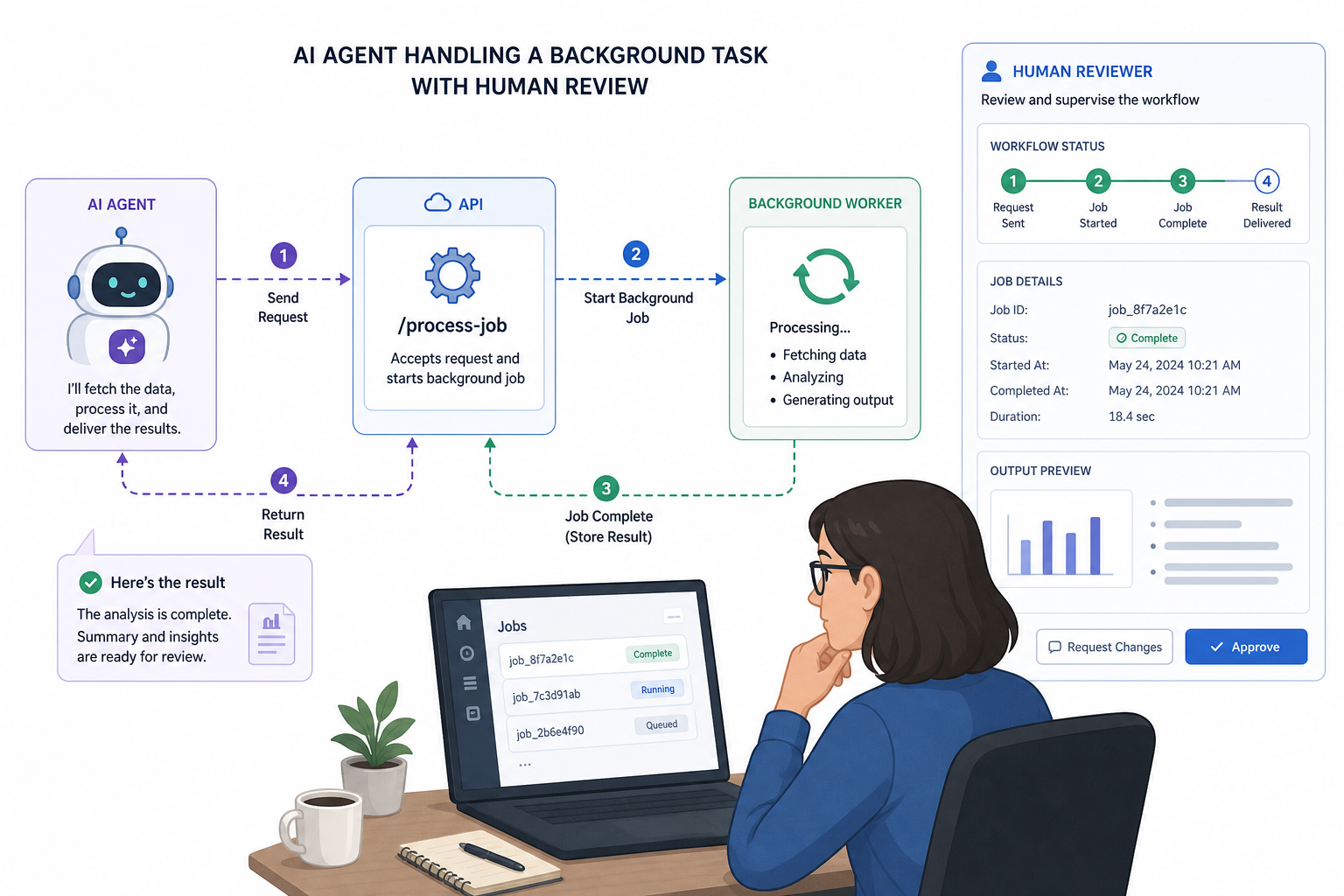
On July 7, Google announced an expansion of Managed Agents in the Gemini API, including background tasks and remote MCP. Google described the update as supporting “background tasks, remote MCP and more.” Separately, Google characterized Gemini 3.5 Flash as “our first in a series of models combining frontier intelligence with action.”
The confirmed news is an expansion of tooling for managed, action-oriented AI systems, not a benchmark claim. Background tasks can support work beyond a single prompt-and-response exchange. The announcement establishes Google’s product direction, but not how well the capabilities will perform across workflows.
Why cost, context, reliability and agentic capability matter
The update highlights practical dimensions of model usefulness: whether developers can incorporate a model into a workflow, connect it with required systems and manage work that is not completed in one exchange. Google’s framing of frontier intelligence combined with action reinforces that emphasis.
It does not show that any agent implementation is reliable for every business process. An announced capability is evidence of product strategy, not proof that deployment, security or oversight questions are resolved.
What enterprise buyers and developers should take from the model race
Buyers should assess the operational layer around models: task management, external-system connections and human supervision of AI actions. Developers can evaluate the Gemini API expansion against a defined workflow rather than grant an agent open-ended authority. The central question is which model-and-tooling stack can be used with appropriate controls for a specific job.
Enterprise AI moves toward measurable workflows
The most important enterprise AI announcement of the week
Reuters reported on July 9 that OpenAI launched ChatGPT Work. The available research confirms the launch, but not product specifications, pricing, integrations, adoption figures or customer outcomes. The launch should not be treated as evidence of market reception or business results.
Where generative AI may produce practical business value
A product explicitly labeled for work is a market signal, not proof of value. It places enterprise use alongside Google’s agent tooling in this week’s competitive narrative: both concern systems intended to participate in work rather than solely generate text or images on demand. Businesses considering such offerings can start with a defined workflow, clear ownership, permitted-data rules and specified points for human review.
The unresolved risks: integration, governance, security and dependence
Integrations determine what a system can access; data governance determines what it should access; security concerns how connections are protected; and model dependence can create exposure to a single provider. These remain organization-specific implementation decisions.
AI regulation and governance move up the international agenda
The key AI policy development from July 5–12
On July 6, U.N. Secretary-General Antonio Guterres addressed delegates in Geneva at the first government-level global dialogue on AI. The meeting was intended to discuss rules for mitigating AI harms and capturing opportunities; it was not a treaty negotiation.
What the change means for model providers and users
The dialogue creates no treaty obligation. Its significance is that AI governance is being treated as a government-level international issue while companies extend agentic and workplace products. It also comes amid an uneven distribution of computing resources: an independent report cited by Reuters estimated that the United States held 75% of computing power among the world’s top 500 AI supercomputers, compared with China’s 15%.
What remains uncertain
Geneva did not produce a completed global AI rulebook. The meeting confirms pressure for coordination, but not the form, timetable or enforceability of a future international framework.
AI startups and funding: infrastructure attracts capital
The week’s most substantive startup funding story
TechCrunch reported on July 8 that AI-chip maker SambaNova raised $1 billion at an $11 billion valuation in the first close of its Series F financing. The round is a substantial marker of investor attention to the systems used to run AI, not only models and applications.
Which AI infrastructure categories are gaining momentum
The financing highlights AI chips as a category attracting major capital. Alongside DeepSeek’s reported internal-chip work and SK Hynix’s planned listing, it puts hardware and capital formation near the center of the generative AI market.
Why the development matters beyond SambaNova
A large funding round does not establish a company’s future market position. It does show the financial scale of competition around AI hardware and the importance of tracking suppliers and alternatives that may shape access to compute.
Infrastructure and AI economics become strategic constraints
The week’s consequential development in chips and compute
Reuters reported on July 7, citing three people familiar with the matter, that Chinese AI startup DeepSeek was developing its own AI chip. This is source-based reporting, not a company-confirmed announcement. Reuters said the effort could reduce DeepSeek’s reliance on Nvidia and Huawei chips, which it had used to train and run models. Reuters also reported that DeepSeek released V4 in April adapted for Huawei Ascend chips, and that Huawei said its processors were used in part of training the lighter V4-Flash model.
Separately, Reuters reported that SK Hynix launched a planned $28 billion U.S. listing intended to benefit from global demand associated with AI. The companies occupy different parts of the supply chain, but both developments underscore the link between AI economics, hardware availability and capital formation.
How infrastructure economics affect generative AI adoption
For organizations adopting generative AI, infrastructure choices can affect supplier dependence and deployment options. DeepSeek’s reported effort points toward reduced reliance on existing chip suppliers, while SK Hynix’s listing and SambaNova’s financing show capital responding to AI-linked hardware demand. These are strategic signals, not a complete account of pricing or supply conditions.
What these AI industry updates mean for the week ahead
Three signals to monitor next week
- Whether Google provides further implementation detail around Managed Agents, background tasks and remote MCP.
- Whether OpenAI publishes additional confirmed information following the ChatGPT Work launch.
- Whether governments or the U.N. identify follow-up steps after the Geneva dialogue on AI governance.
Bottom line for businesses, developers and AI watchers
This week’s artificial intelligence news is a convergence story. Model providers are emphasizing action-oriented tooling; enterprise-focused products are coming into view; governments are discussing governance; investors are funding AI chips; and infrastructure companies are seeking capital around AI demand. Businesses can map these developments to a few decisions: which workflows merit AI deployment, what controls are required, which providers create concentration risk and how compute availability affects the plan.